- Tastes Like a Cheat Meal
- Posts
- What Nutrition Labels Don’t Tell You (But Should).
What Nutrition Labels Don’t Tell You (But Should).
Here's the dirty little secret they don't want you to see.....

Yashwardhan Singh
October 01, 2025
Welcome to the forth edition of Tastes like a Cheat Meal. You can read others here - https://newsletter.proskii.in/.
For first timers, this is Proskii’s weekly newsletter. Both me (Yash) and Rohit hate reading long emails / blogs, so we usually keep these short and promise to not spam your loving soul
SACH MAI!! AMRITSARI CHOLE KULCHO KI KASAM
👀 Bro, You Ever Actually Flipped the Pack?
Let’s be honest—most of us buy food by just looking at the big bold words on the front:
👉 “High-Protein”
👉 “Low-Fat”
👉 “Sugar-Free”
And we toss it in the cart, feeling proud of our so called ‘healthy choice’😎
But here’s the truth no one tells you:
Those labels? Marketing.
The real story is hiding on the back.
When me and Rohit started digging deeper into labels (mainly because we felt scammed by “high-protein” cereals 🙃), we realized:
🤯 They’re playing us, bro.
So here’s a quick crash course to stop getting fooled:
💪 1. “High-Protein” – Kahaan Se?
Here’s the trick:
Legally, to call something “high-protein” → it just needs 20% of its calories from protein.
That might sound decent… until you realize:
✅ It doesn’t mean “a lot” of protein overall
✅ It doesn’t mean complete protein (all 9 amino acids)
✅ It doesn’t tell you the quality of the protein
👉 Many brands literally just toss in cheap soy powder to bump up the numbers, but you’re still missing better protein sources.
PDCAAS score matters. A protein’s digestibility and amino acid profile determine how useful it actually is for your body.
Example:
Whey protein = 1.0 (perfect score)
Soy = 0.9 (decent)
Oats = 0.57 (meh)
So, if your “high-protein oats” are oats + soy powder, you’re eating two incomplete protein sources blended together → not the same as getting complete protein.
🥛 2. The “Protein Boost” Trick You Should Know
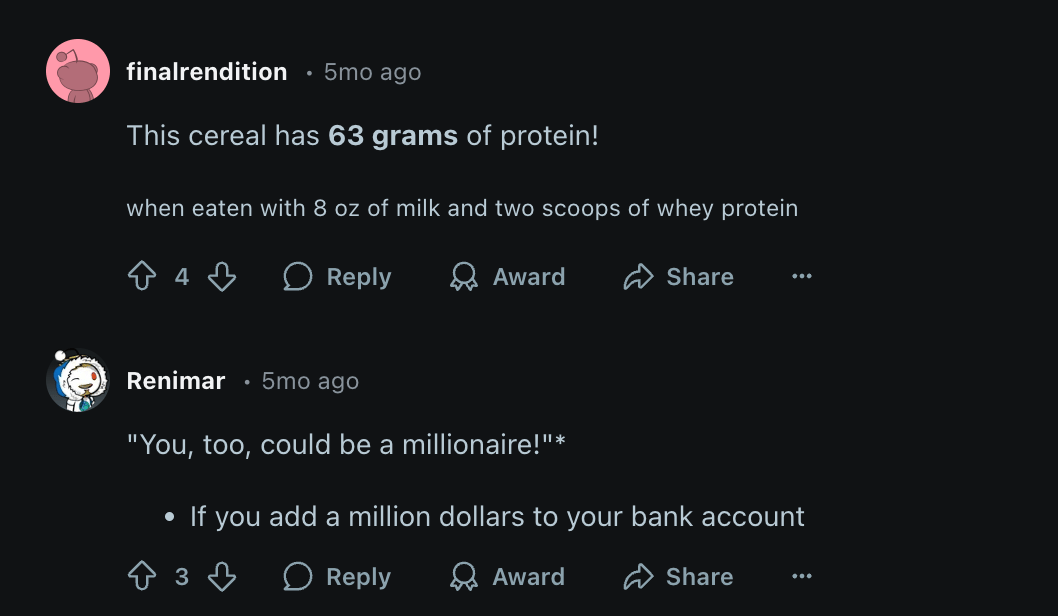
Reddit users calling out the hypocricy
Ever seen a cereal pack scream “20g protein per serving” — and thought, wow, that’s a lot?
Look closer.
Many brands quietly include milk protein in their claims.
On the pack you’ll see something like:
“20g protein — when eaten with 250ml milk.”
So the cereal alone may only have 5–7g protein, but the big number on the front comes from what you add yourself.
It’s like saying:
“This cereal has 63g of protein!”
…when eaten with milk and two scoops of whey.
The number sounds great but doesn’t reflect what’s actually in the cereal.
👉 Always check the nutrition panel for protein per 100g — that’s the true measure of what the product delivers on its own.
🍬 3. “Sugar-Free” vs. “No Added Sugar” → They’re NOT the Same
When it comes to food labels, these two sound similar—but they mean VERY different things (the government actually regulates this):
✅ “Sugar-Free” → Means less than 0.5g sugar per serving. But brands can use artificial sweeteners (like sucralose, aspartame, etc) to make it taste sweet.
✅ “No Added Sugar” → Means no sugar was added during manufacturing → BUT it can still contain natural sugars.
👉 Translation?
A product can legally say “no added sugar” and still be naturally sweet (because sugars are already in the ingredients).
✅ “No Added Sugar” ≠ “Sugar-Free” → It just means nothing extra is added on top of what’s naturally in the ingredients.
🚨 Quick Takeaways (Bro-To-Bro Cheat Sheet)
✅ Don’t trust the big claims on the front
✅ Flip the pack and read the ingredients
✅ Check protein quality, not just grams
✅ Watch serving size scams
✅ Know the sugar wording
P.S : Next time you’re in the cereal aisle, flip the pack. Pretty soon you’ll find Proskii (the one’s lable that actually makes sense)
🏗️ Proskii Updates
🛠️ Work in PROgress:
Last week, we ran our first commercial trial, essential trial on a larger scale in an factory setup.
Until now, all our tests were done on a small lab scale. This trial was designed to understand the exact temperature, moisture, and raw material proportions needed to manufacture at a larger scale.
The process ran in two phases:
1️⃣ Creating the cereal base — made from protein.
2️⃣ Adding the coating layer to complete the product.
This was a critical step towards moving from R&D to real-world production.
More updates coming soon on our Instagram as we continue to refine and scale.
 Rohit working inside the factory | 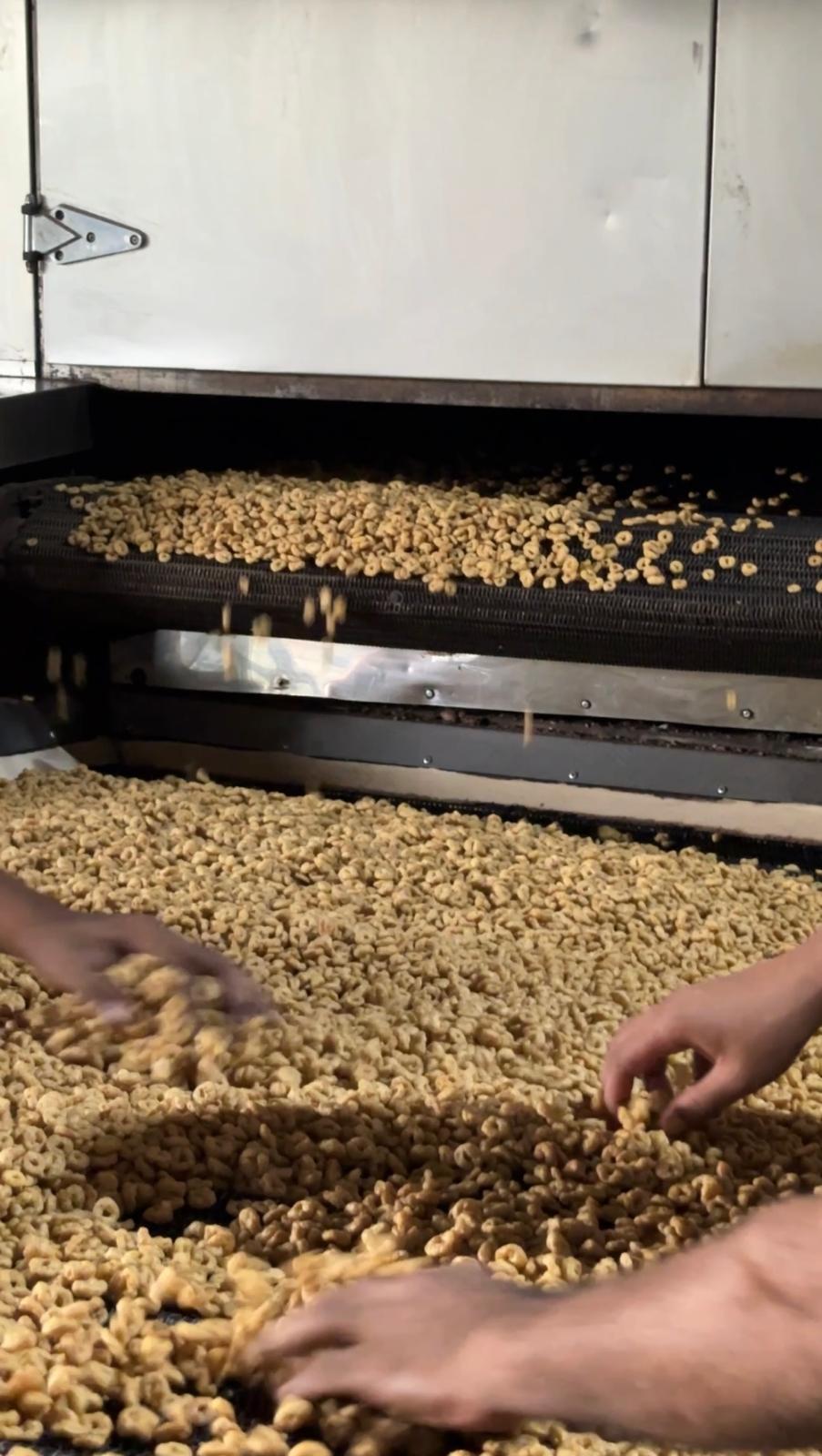 Cereals coming out from the 2nd phase |
P.S : Early Broskiis get better access to the crunch, latecomers get FOMO. Join the waitlist here —> https://tally.so/r/w8RVXo
Thank you for reading till the end - You’re a sweetu
Also thank you for subscribing to the newsletter - sweetu x 2
We’re working hard taki aap CEREAL CHUNO, CHINI SE BHARE CEREAL KILLERS NAHI!!
See you next week